Local Publication · Case study
Foothills Local GuideA commercially owned guide that labels its own relationships on every page.
- Client
- Foothills Local Guide
- Industry
- Local Publication
- Market
- Cochrane, Calgary & the Alberta foothills
- Relationship
- Operated within the VeePo family of companies, which also includes this studio
- Launched
- 2026
- Published
- Live site
- foothillslocalguide.com
- Status
- Live and indexed; the publisher's operating entity is still to be stated on its ownership page.
Overview
Foothills Local Guide is a local-services publication covering Cochrane, Calgary and the Alberta foothills: buying guides, factual business profiles, area pages and a free 'Before You Hire Kit'. It is operated within the VeePo family of companies — the family this studio belongs to — and Local Cochrane Web Design built it as a publishing system rather than a brochure: 242 prerendered URLs generated from a governed article library, with the publisher's commercial relationships labelled on every profile and card.
The brief for a guide like this is usually to look independent. This one does the opposite. Its ownership page states who operates it and which profiled businesses are affiliated; each business card carries a relationship label — 'Affiliated business', 'Client of an affiliated business', 'Independent listing'; and its editorial policy sets rules the site then visibly follows: no invented reviews, ratings or badges, prices shown only as a provider's own dated claim, ranked lists only with a stated method, and no hidden text or instructions for automated systems. Underneath, a reader can research a service, compare quotes with a cornerstone guide, find a provider by service and area, and take a seven-question hiring kit away by email.
The live site
Built to be judged in the only place that counts.


Captured from the live site — different pages, real pixels, no mockups.
The client
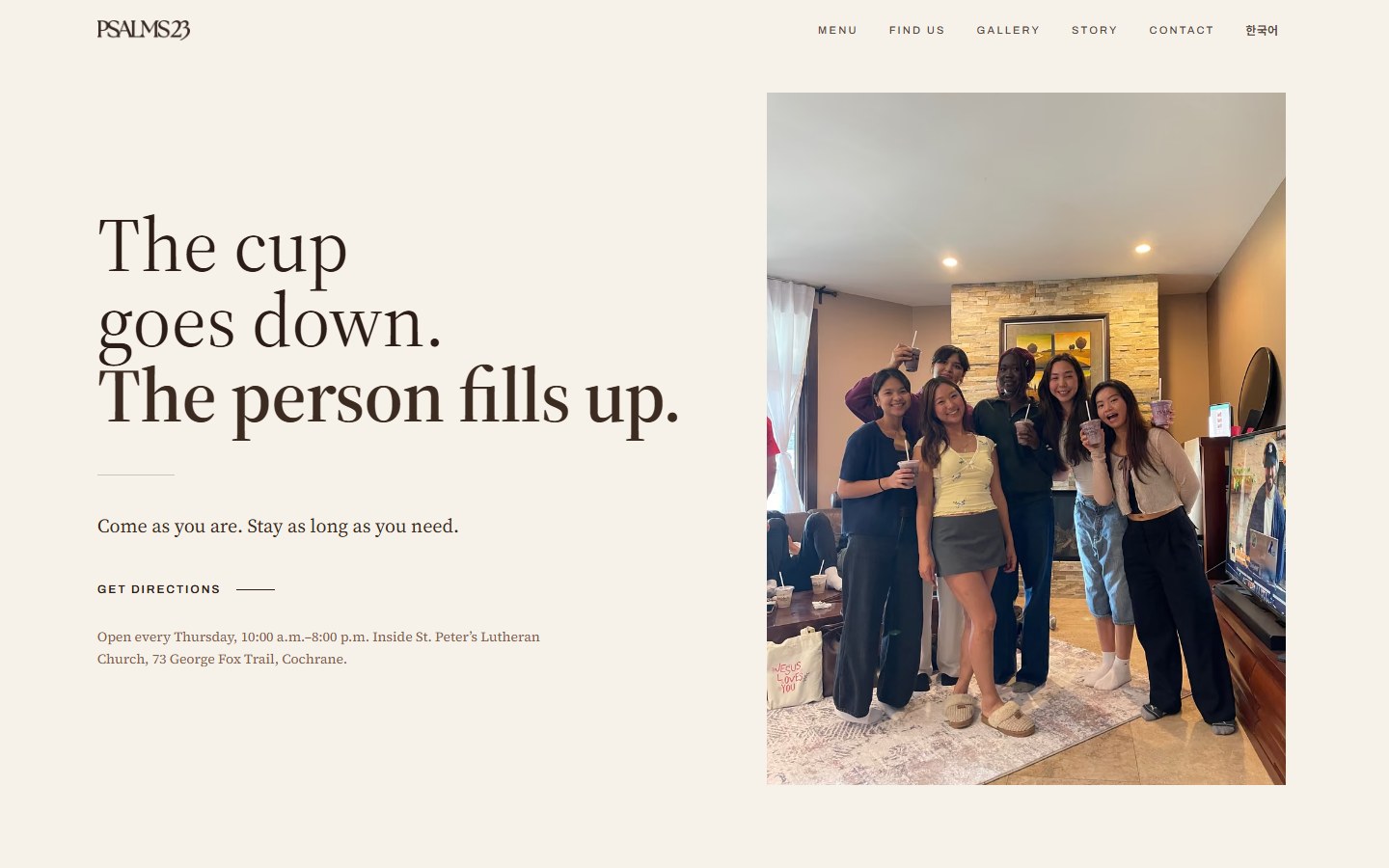
The guide's first four service categories are the ones its affiliated and client businesses work in — web design, photography and film, coffee catering for events, and vehicle detailing — with six profiles published at the time of writing: three affiliated (Atom2Adam, Local Cochrane Web Design, Fly4MEdia), one client of an affiliate (GreenCo Detailing) and two independent (Psalms 23 Cafe, Colors of Glory).
Its readers are owners and householders about to hire someone, and the guide's stated purpose is to help them evaluate, not merely find: what a written quote must specify, what is commonly excluded, which questions expose a weak offer before it is accepted.
The challenge
A publication owned by the same family as some of the businesses it profiles has one credibility problem and it is structural. Readers and search systems both discount a guide that appears to review its own owners. The only durable answer was to make the relationships impossible to miss.
At the same time the site had to publish at scale — hundreds of guides and area pages — without producing the interchangeable, generated pages that discovery systems penalise. Every page needed a reason to exist, a named author, a checked date and a source.
Strategic objectives
What the build had to accomplish.
Disclose ownership and every commercial relationship on the pages where a reader would otherwise have to guess.
Publish an editorial policy with testable rules, and build the publication so the rules are enforced before a page can ship.
Give a reader a practical path from research to a provider: service and area finder, buying guides, factual profiles with sources, and a hiring kit they can keep.
Generate every route as complete HTML with structured data, a crawler policy and a plain-text map for language models.
Keep the publisher's enquiries separate from the providers' — the guide takes corrections and kit requests; a provider's enquiries go to the provider's own site.
The insights that shaped the work
Disclosure is not a footer. If the relationship matters to the decision, it belongs on the card.
A guide earns the right to publish hundreds of pages by refusing to publish one it cannot defend. The validation gate is the editorial policy, mechanised.
The most useful thing a publication can give a buyer is the question they did not know to ask. The kit is the product; the profiles are the directory.
Chapter
Relationships labelled where the reader is deciding
Insight
A reader comparing providers looks at the card, not the about page. A disclosure that lives only on a policy page is a disclosure most readers never see.
Decision
Every business card and profile carries its relationship to the publication as a label — 'Affiliated business', 'Client of an affiliated business' or 'Independent listing' — next to where the business is based and the areas it serves. The ownership page explains each label with the evidence used to assign it: that Atom2Adam's footer credits VeePo, that the same founder is named on Fly4MEdia and Local Cochrane Web Design, that GreenCo appears in that studio's portfolio. It states 'There are no sponsored features or paid placements at present', commits that affiliated businesses are not ranked first, and confirms the two independent listings as independent. The guides themselves repeat the disclosure inline wherever they link to an affiliated provider.
Effect
The guide's structural conflict becomes a visible fact the reader can weigh, rather than a discovery that would discredit everything else. A search or AI system reading the page gets the same labelled relationship, which is what lets the profile be cited accurately.

Chapter
An editorial policy the build enforces
Insight
Policies are easy to write and easy to drift from. At the scale of a few hundred pages, the only policy that holds is one the publishing system checks.
Decision
The policy page sets the rules — a page must help a specific reader decide, claims must be sourced, no invented reviews, ratings, awards or years in business, prices only with scope and date, ranked lists only from a researched pool with the method explained, 'If only three providers qualify, we list three', and no hidden text for automated systems. The implementation treats those as gates: articles live in a server-only library of 197 records across six templates, each validated before it can be published, approved by a reviewer against a revision hash so an edit invalidates the approval, and previewable only as a noindex draft until it passes. Every published guide carries a named byline, a published date and a 'Facts checked' date; the build writes a report listing any launch blockers.
Effect
The site can publish at volume without publishing filler. A reader sees the author and the checked date on every page; the publisher cannot ship a guide that breaks its own rules without noticing.

Chapter
From research to a provider, without the guide getting in the way
Insight
A buying guide that ends in a 'request a quote' form run by the publisher is a lead broker. The reader came to understand the purchase, not to be routed.
Decision
The path is research first. The homepage finder is two plain selects — a service and an area — that lead to the service hub, where 'what you are buying' is explained before any provider is named. The cornerstone guide, 'How to compare local service quotes', gives an eight-row checklist (outcome, deliverables, exclusions, revisions, timeline, ownership, ongoing costs, acceptance criteria) and a worked example marked as hypothetical. Profiles reproduce a provider's own published prices and coverage with per-row sources and a 'Useful limits' section flagging what could not be verified. The free Before You Hire Kit — seven questions and a three-provider comparison sheet — is delivered by email with the page stating truthfully whether the email was accepted for sending, and 'We do not pass your address to any business.' Enquiries to a provider go to the provider's own website.
Effect
The reader leaves better equipped whether or not they hire a profiled business, and the providers receive enquiries from people who already know what to ask. The publication's value is the clarity, not the referral.

Recognize your own business in this problem? The same system builds yours.

The mobile experience
A householder checks a guide on a phone between getting two quotes. The finder is two native selects and one button, so it works with the thumb and the system picker; guides open with an 'On this page' list so the relevant section is one tap away; comparison tables collapse to readable rows rather than scrolling sideways; and the kit sign-up is a single email field with its consent checkbox and disclosure immediately beneath. Business cards keep the relationship label beside the name at every width, so the disclosure never drops out of view on a small screen.
Colour & type
The palette below is sampled from the live Foothills Local Guide site — the exact tones the brand is built on.
#1F2A24
#2F6B4A
#878C88
#B9A77E
#D2D6D1
#F1F1ED
Search & discoverability
The publication is built to be read by machines as carefully as by people. All 242 routes in the sitemap are prerendered to complete HTML with their own title, description, canonical and a connected structured-data graph — WebSite and Organization for the publisher, Article with a named Person author on every guide, ProfessionalService on profiles, ItemList on the directory and hubs, BreadcrumbList throughout. A robots file sets out a crawler policy that names the major search and AI agents individually, and a plain-text llms.txt maps the site for language models. The sitemap was submitted to Google Search Console on 19 October 2026, and ten subsequent commits refreshed live pages after re-checks of the named businesses. Whether any of this earns rankings or citations is not claimed here; being crawlable is a property of the build, being cited is something only time measures.
Technology & ownership
The guide is a static publication the publisher owns outright: a content library and six page templates compiled to plain HTML files, with the only server-side code being four small functions for the kit request, the contact form, email-delivery events and one-click unsubscribe. Kit emails go through a transactional service with retry, bounce handling and a 90-day retention rule written into the configuration. Adding a guide is a content record and a reviewer's approval, not a rebuild of the site.
Immediate outcomes at launch
Ownership is stated on its own page, and every one of the six business profiles carries a relationship label — affiliated, client of an affiliate, or independent — beside the name.
An editorial policy with testable rules is published, and the build enforces it: validated records, reviewer approval tied to a revision hash, noindex drafts, a named author and a checked date on every guide.
242 prerendered URLs — 172 guide pages, 50 area pages covering 236 communities, six profiles, four service hubs and the publisher pages — each with its own structured data.
A two-select finder, a cornerstone quote-comparison guide with an eight-point checklist, and a free seven-question hiring kit delivered by email with honest delivery status.
Provider prices and coverage appear only as the provider's own dated claims, with per-row sources and a 'Useful limits' section on each profile.
A crawler policy naming individual search and AI agents, a plain-text llms.txt, and a sitemap submitted to Search Console.
Common questions
What owners ask before commissioning a build like this one.
Can a business-owned local guide be trustworthy?
Only if it says who owns it where it matters. Foothills Local Guide is operated within the VeePo family of companies and states so on its ownership page, labels every profile 'Affiliated business', 'Client of an affiliated business' or 'Independent listing', and commits that affiliated businesses are never ranked first.
How do you publish hundreds of local guide pages without producing thin content?
By making the editorial policy a build step. Foothills Local Guide's 197 article records pass a validation gate, need a reviewer's approval tied to a revision hash, preview only as noindex drafts, and carry a named author and a facts-checked date — so 242 pages can ship without one the publisher could not defend.
How should a buying guide connect research to hiring a provider?
Research first, routing last. The guide explains what you are buying before naming anyone, gives an eight-point quote checklist and a free seven-question hiring kit, reproduces provider prices only as their own dated claims with sources, and sends enquiries to each provider's own website rather than brokering them.
What does a publication need so AI assistants can cite it accurately?
Complete HTML and labelled facts. Every route here is prerendered with Article, Person, ProfessionalService and ItemList structured data, a crawler policy names the major AI agents individually, and a plain-text llms.txt maps the site. Relationships are labelled in the same text a model would quote, so the disclosure travels with the citation.
What results does this case study claim?
None that were not observed. No traffic, rankings, kit-request counts or citations appear here, because none have been measured. What is documented is the build — its disclosure model, its enforced editorial policy, its publishing system and its discovery layer — verified against the live site and the studio's repository on 21 October 2026.
Where it stands
Foothills Local Guide is the studio's own answer to the question its editorial policy asks of everyone else: can a commercially owned publication be useful? It can, if it labels its relationships where decisions are made, enforces its rules in the build rather than the footer, and sends the reader away better informed whether or not they hire anyone it profiles. That is the standard it was built to, and the standard a reader can check.
- Publishing System
- Editorial Architecture
- Prerendered HTML
- AI Search Optimization
More case studies
The same system, a different market.


Your project
Your business may have outgrown its website.
Foothills Local Guide needed more than a redesign — it needed its real-world strengths made visible online. If that sounds familiar, tell us about your business. A written, itemised proposal comes back within one business day.
Free · No obligation · Written quote within 24 hours
Building Websites That Work as Hard as You Do